
ASTRI Mini-Array opens a large window on the gamma-ray sky
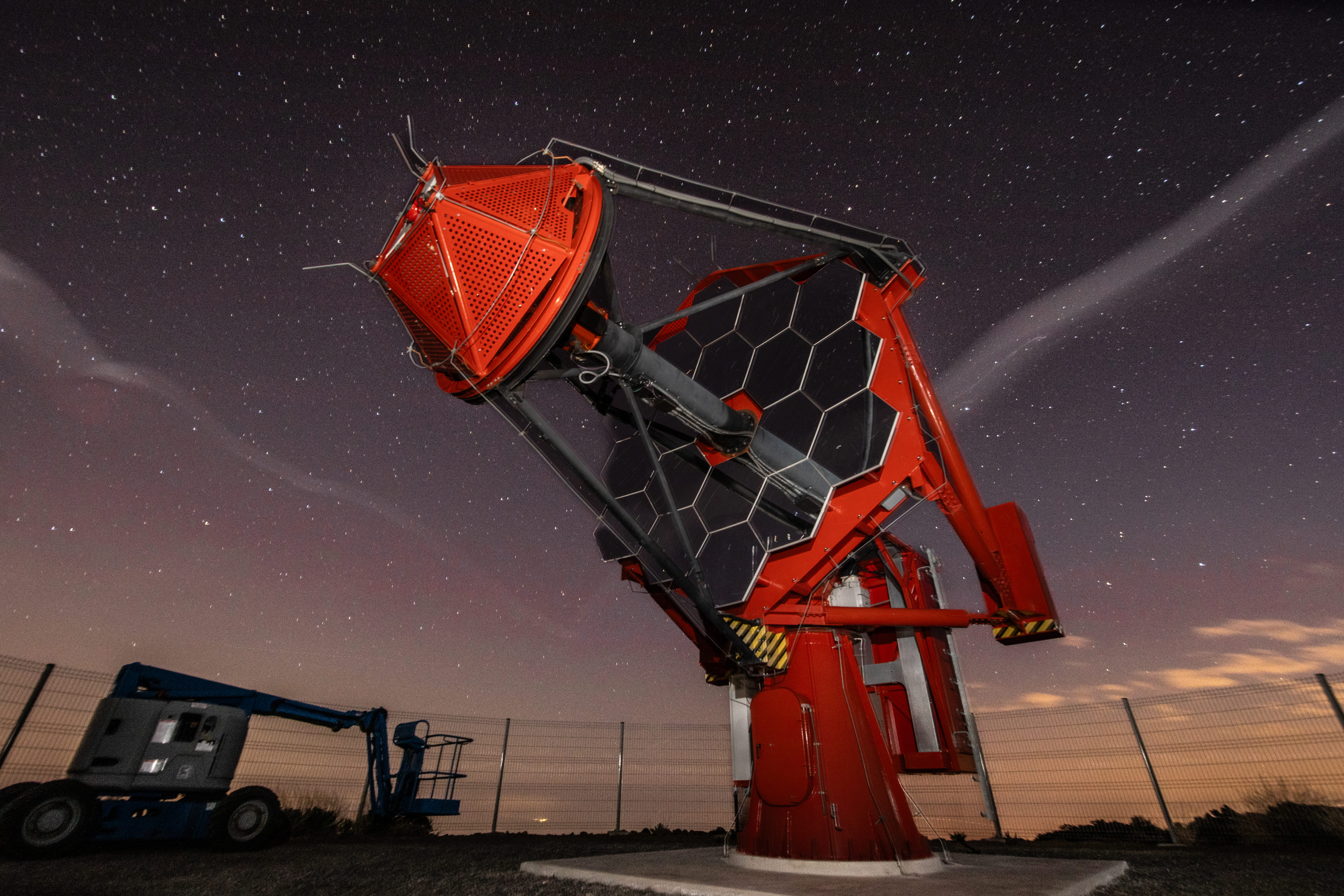
ASTRI Mini-Array is ushering in a new era in the study of the sky at the most extreme energies. This innovative experiment, led by the Istituto Nazionale di Astrofisica (INAF), is designed to observe the most energetic gamma rays, with energies ranging from 1 to over 100 tera electronvolts (TeV), using a new generation of Cherenkov telescopes.
One of the most striking features of ASTRI Mini-Array is its exceptionally wide field of view: more than 10 degrees in diameter. To give a sense of scale, this corresponds to a portion of sky more than twice as that observable with previous Cherenkov telescopes, which typically do not exceed 4–5 degrees in diameter.
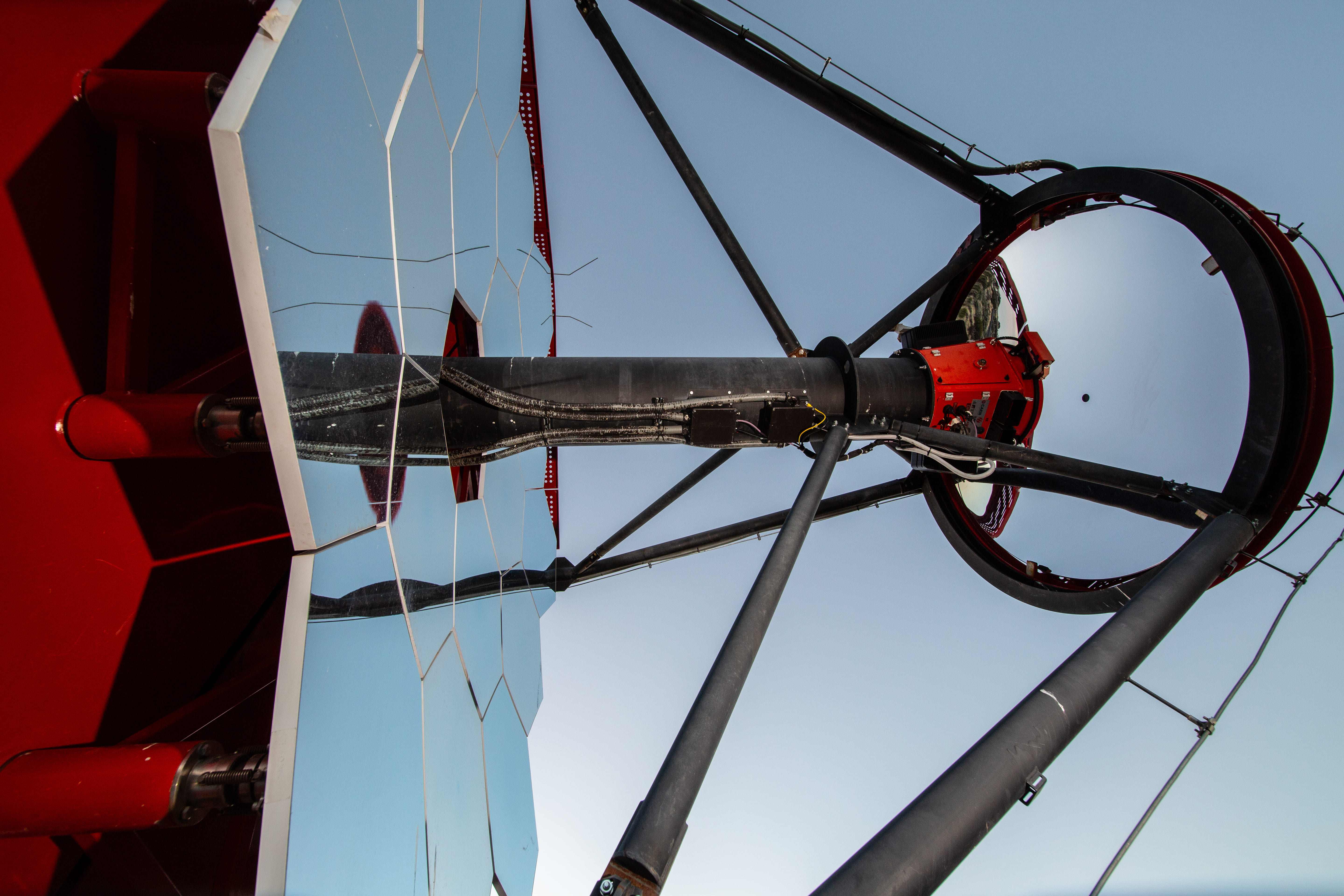
The secret behind this “panoramic view” lies in its innovative optics. ASTRI telescopes adopt a dual-mirror Schwarzschild–Couder configuration, which allows optical aberrations to be corrected even toward the edges of the field of view, producing images of Cherenkov flashes from air showers with the same sharpness across the entire observed area. In more traditional Cherenkov telescopes, by contrast, images become progressively more blurred as one moves away from the center.
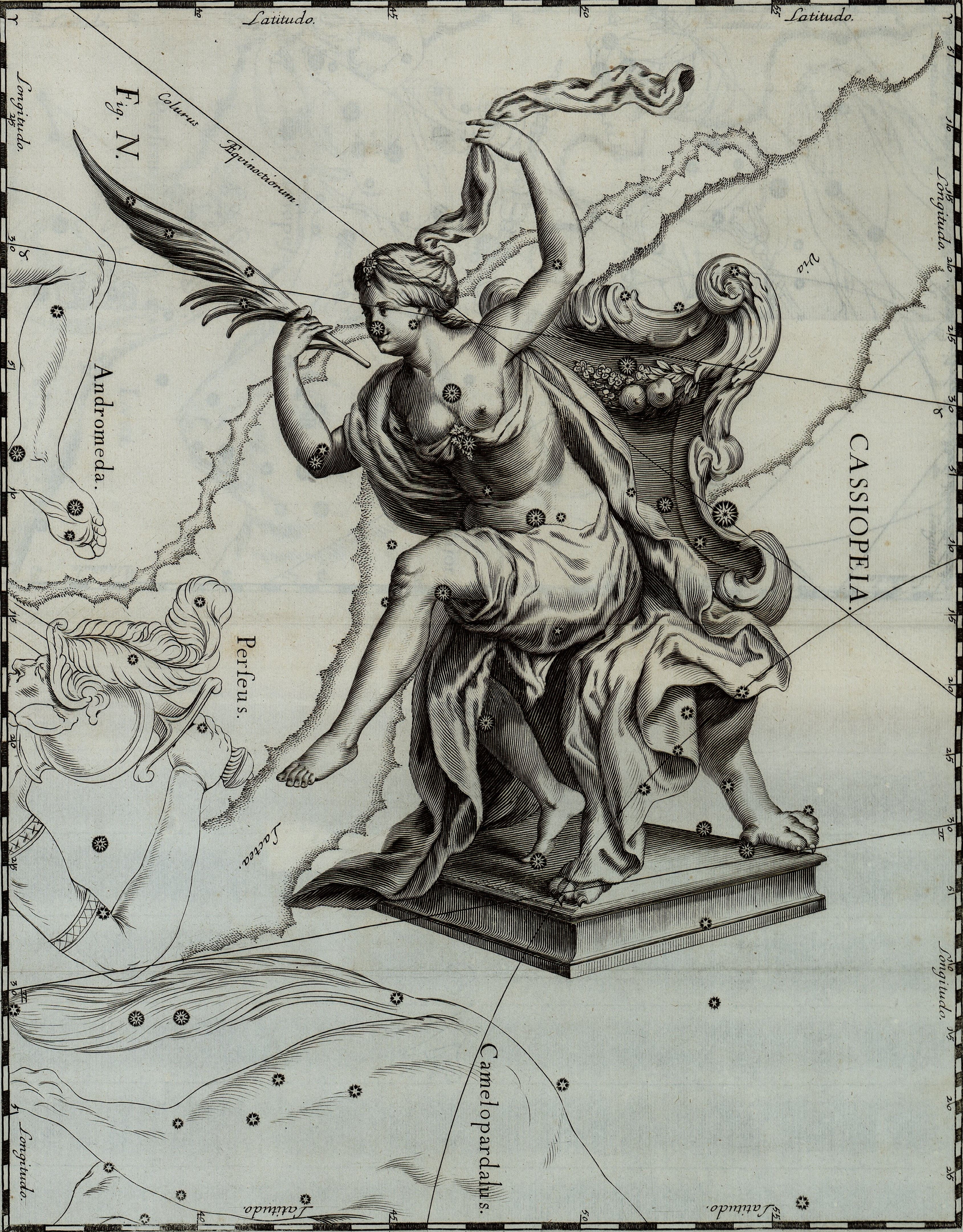
To better understand the difference, let us imagine using a Cherenkov telescope as if it were a conventional optical telescope and observe the “W” of the Cassiopeia constellation, which spans about 10 degrees [1]. With a previous-generation Cherenkov telescope, this would be a bit like looking through a keyhole: only part of the constellation would be visible, and the stars near the edges would appear less well defined.
With ASTRI Mini-Array, instead, it would be like opening wide the door to the sky: the entire asterism (the W) would fit into the field of view in a single observation, and the bright stars of the constellation would be clearly observable even at the edges of the image.
It should be stressed that ASTRI is not an optical telescope, even though it observes in the visible band. Nevertheless, thanks to its structure and cutting-edge technology, it allows us to reconstruct the gamma-ray sky through observations of Cherenkov light generated by the interaction of cosmic gamma rays with the atmosphere. The reconstructed gamma-ray images appear uniformly sharp over a much larger area than was possible with past instruments.
The first observations confirm this fact. The ability to distinguish gamma rays from the background of cosmic rays in reconstructed images remains very high out to about 3.5 degrees from the center of the field of view, as confirmed by observations of the Crab Nebula carried out during the 2024–2025 commissioning phase, in this article by Silvia Crestan and colleagues.
This wide field of view represents a major scientific advantage. For example, ASTRI Mini-Array can observe many more sources simultaneously than previous Cherenkov telescopes, collecting in a single pointing an amount of information that previously would have required many separate observations. This will be particularly important for the study of dense and complex regions of the sky – such as the Cygnus region – which can be observed without the need to continuously reposition the telescopes, thereby reducing the overall time required to detect sources of interest.
Moreover, being able to observe large portions of the sky increases the likelihood of discovering unexpected or transient phenomena – brief and unpredictable events that can provide crucial clues about the most energetic processes in the Universe.
Thanks to the combination of a wide field of view and good angular resolution, ASTRI Mini-Array will help us answer still-open questions about the origin of cosmic rays, the nature of the most energetic sources in our Galaxy and beyond, and it will capture transient or fleeting phenomena in the gamma-ray sky.
[1] This is roughly equivalent to 20 adjacent full moons.
This post is also available in: Italian


